Environmental Control System, in short ECS, is the system that regulates cabin air temperature and pressurisation. It keeps you comfortable and safe, two essential parts of the TBM flying experience. While it may seem like a simple system at first glance, there is substantial engineering behind delivering stable temperature, ventilation, and pressurisation to this high-performance turboprop, the Daher TBM.
Three sub-systems make up the ECS on the TBM:
- The Engine Bleed Air System (EBAS)
- The Cabin Pressurization Control System (CPCS)
- The Dual-zone Temperature Control System (TCS)
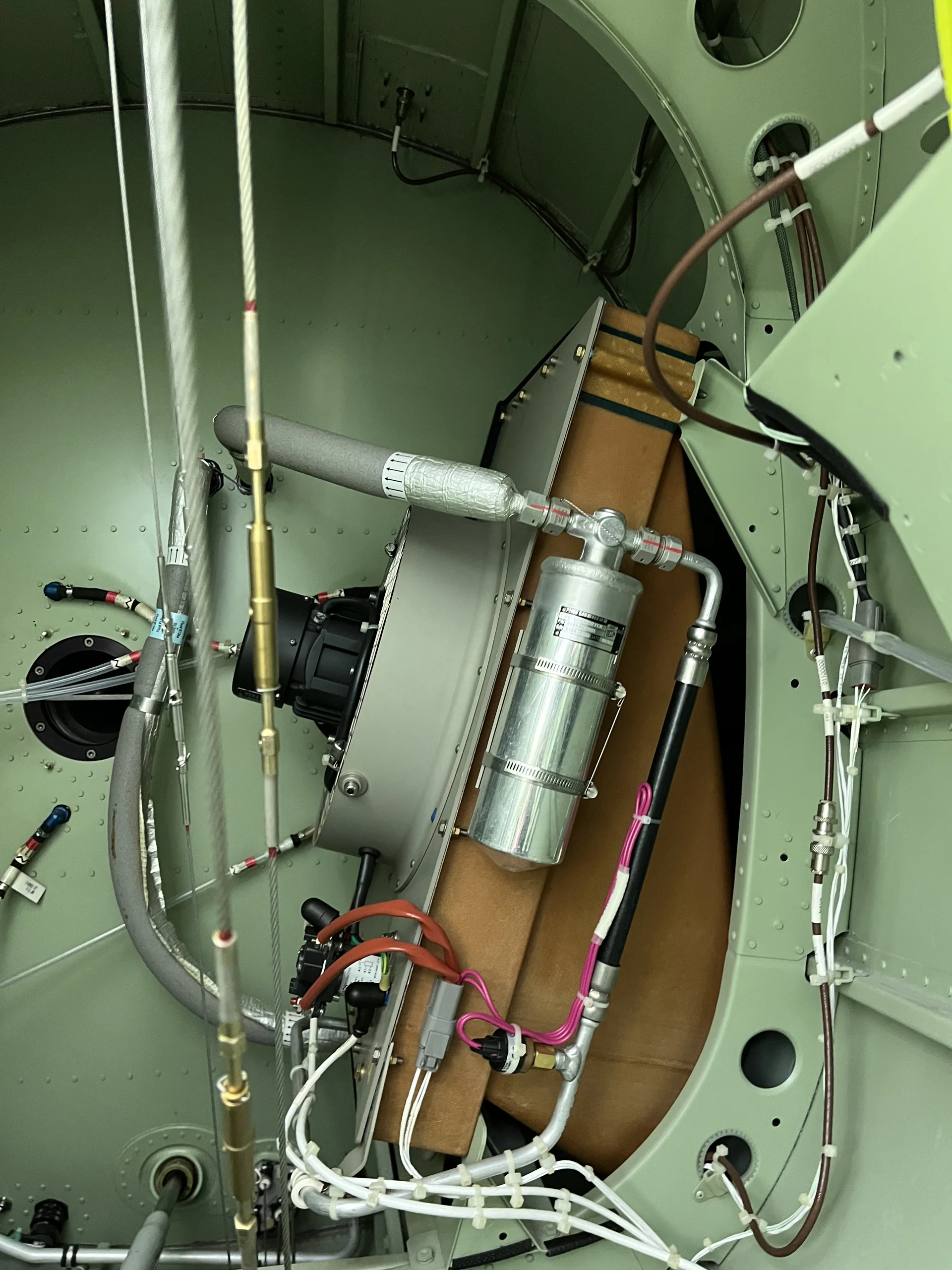
One element of the TBM’s cooling system is the condenser module, a part of the aircraft’s air-conditioning process. Seen in the picture below.
The condenser is one of the main reasons the cabin can stay cool and comfortable, even on hot days or during slow-speed operations when airflow is limited.
The condenser module of the TBM ECS sub-system Vapor Cycle System (VCS).
It is located in the unpressurised area in the empennage just aft of the rear pressure bulkhead
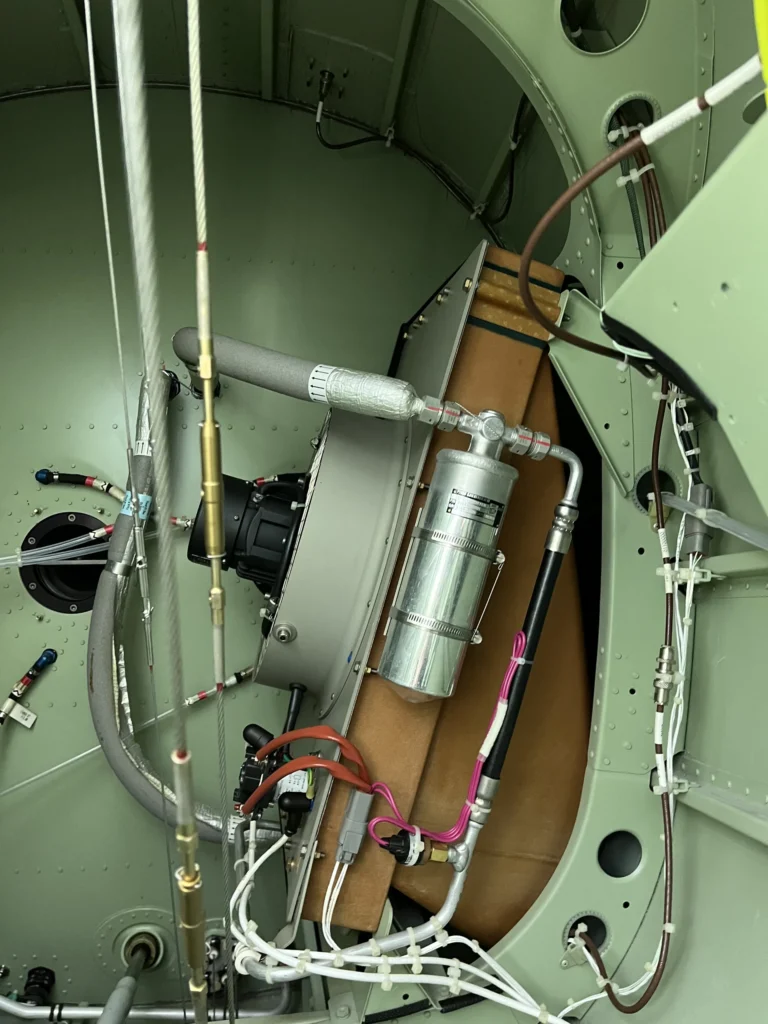
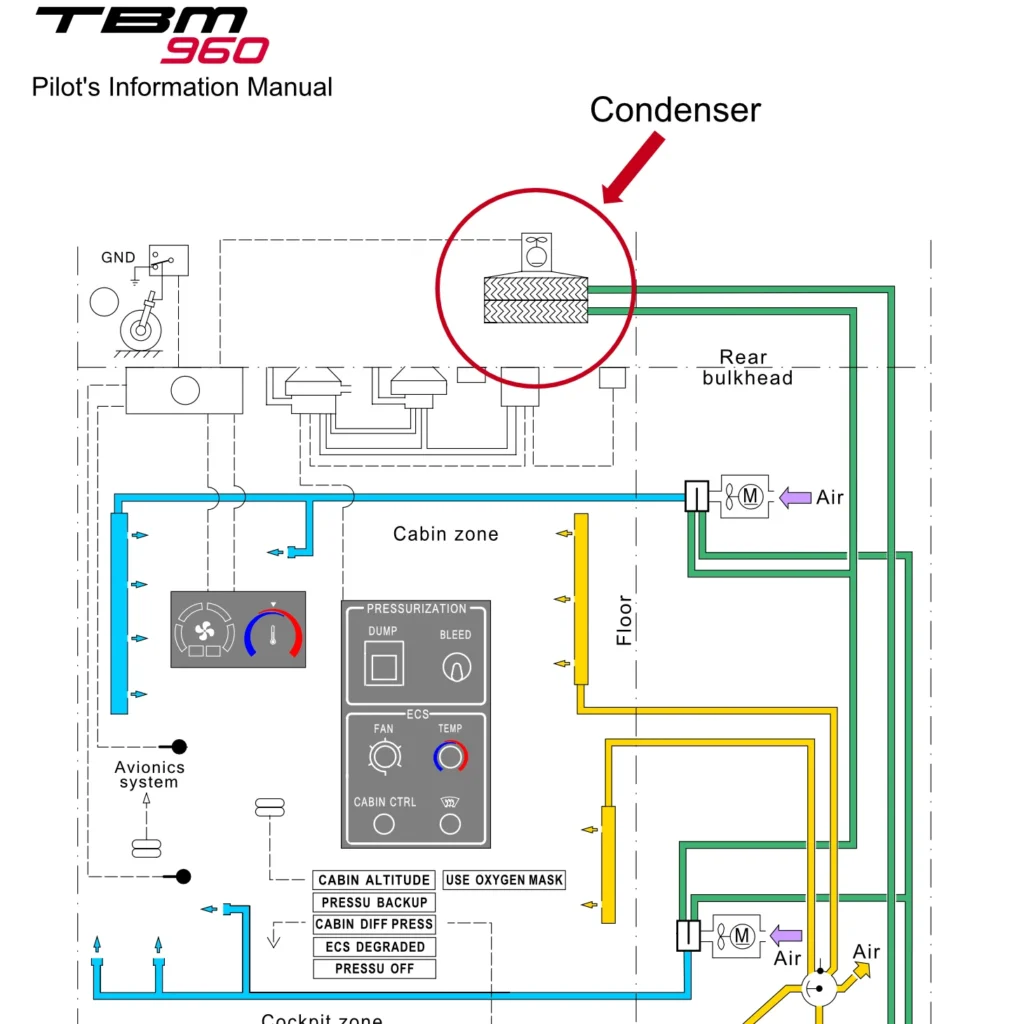
The TBM Pilot’s Information Manual presentation of the ECS. In the red circle is the condenser seen on the photo above.
On the other end, so to speak, of the condenser is the evaporator. The evaporator is where the cold air is produced.
One of the standout features in the TBM is its dual-zone Temperature Control System (TCS) achieved by two subsystems, the Vapor Cycle System (VCS) and the Cabin Heating System (CHS). This means that there is a dedicated evaporator assembly for each zone, controlled by the cockpit or passengers respectively so each have their own separate temperature setting, a big advantage. It’s a small detail that makes a big difference in overall comfort, especially on longer trips.
The heart of the VCS is the compressor. The compressor is engine driven connected by a belt. The compressor ensures the pressurisation of, and moves, the refrigerant through the system. It pulls the low-pressure refrigerant vapour from the evaporator, compresses it, and out puts to the high-pressure (condenser) side.
Heating is achieved by the CHS regulating the hot air from the Engine Bleed Air System (EBAS) and mixing it with ambient cabin air at the Recirculation Ejector.
The EBAS supplies the air into the cabin used for pressurization. The bleed air flow is controlled by the Bleed Ejector Valve (BEV), the Flow Control Valve and the Shut Off Valve driven by the Bleed Flow Controller.
The Cabin Air Controller controls the modulation of the Outflow Valve to achieve the computed cabin altitude. During all phases of flight the cabin altitude management is automatic, needing only one pilot input – the Landing Field Elevation.
All the components of the TBM ECS, and there are many more than the mentioned, are finely tuned technologies designed to respond smoothly to changing conditions inside and outside the aircraft. The result is a cabin environment that stays stable and super comfortable from takeoff to landing. Pilots can benefit from a cooler, alertness-enhancing cockpit while the passengers can enjoy a warm, calm and pleasant cabin atmosphere.
The TBM ECS brings sophisticated engineering together with thoughtful design in providing a refined, comfortable, reassuring, and safe flying experience.